
 Antonio
Routine maintenance becomes difficult when access to the underside of a motorcycle is limited. Chain adjustments, tire changes, and cleaning tasks all require elevation. That is why many riders invest in a Motorcycle Lift to create a safer and more controlled working position. Because balance matters. And balance is not something you want to guess.
Why elevation improves maintenance accuracy
Working on a bike at ground level forces awkward posture. Kneeling. Leaning. Straining your back.
Lifting the motorcycle to waist height changes everything. You see components clearly. Tools fit properly. Adjustments feel precise. Comfort improves focus.
And focus improves safety.
Hydraulic versus mechanical options
Not all lifting systems operate the same way.
Hydraulic lifts use fluid pressure to raise the platform smoothly. Mechanical versions rely on manual cranking or foot pedal systems.
Hydraulic systems often feel smoother during elevation. Mechanical designs may require more physical effort but can be simpler in structure.
Choosing depends on frequency of use and personal preference.
Neither option is automatically superior.
Stability features to prioritize
When a bike is elevated, stability becomes critical.
Look for:
- Wide platform base
- Locking safety bars
- Non slip surface coating
- Adjustable wheel clamps
- Secure tie down points
A properly secured lift prevents shifting while working.
Even small movement at height can feel unsettling.
Weight rating considerations
Every lift includes a maximum weight capacity. Always select a model rated above your motorcycle’s total weight.
Underestimating capacity increases risk.
Consider accessories and added gear when calculating total load.
Exceeding limits compromises structural integrity over time.
Garage workspace efficiency
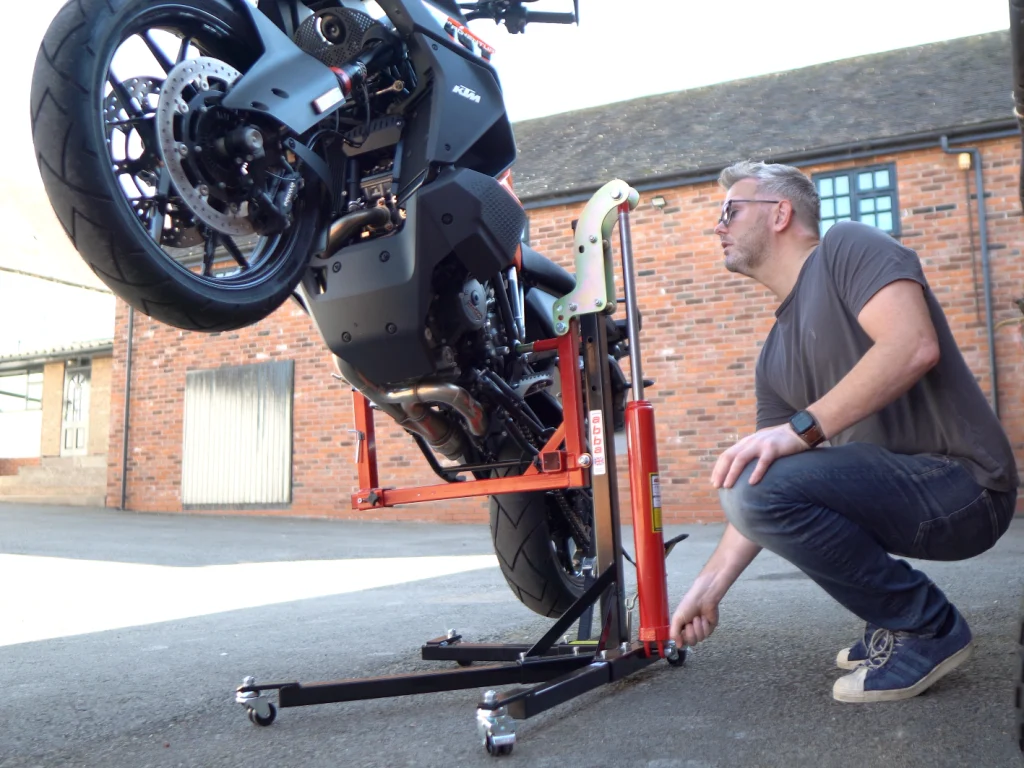
Elevating the bike frees up surrounding space. Tools can be arranged neatly. Parts remain within reach.
A lift also improves lighting access. Shadows under the engine decrease when the bike is raised.
Organized workspace leads to smoother maintenance sessions.
Less frustration. Fewer dropped tools.
Storage and portability factors
Some lifts fold flat when not in use. Others remain fixed in position.
If garage space is limited, portability becomes important.
Check wheel locking mechanisms if mobility is required. Ensure the base remains stable when stationary.
Storage convenience affects daily usability.
Safe operating practices
Even with quality equipment, careful operation matters.
Raise the platform slowly. Confirm safety locks engage fully. Avoid sudden adjustments once elevated.
Keep tools clear of moving parts during lowering.
Attention during setup prevents accidents later.
Performing maintenance on a motorcycle should feel controlled, not unstable.
Using a Motorcycle Lift provides elevated access, improved visibility, and safer positioning during repairs and adjustments. With proper weight capacity and stability features, riders can work confidently while protecting both equipment and personal safety.